
Construction-focused remediation for recurring leaks and exterior moisture pathways.
Water may appear at one location even though it entered the building somewhere else. It can move behind cladding, along framing, across membranes or through transitions before becoming visible.
Stonebridge applies experience with water-intrusion conditions and building-envelope failures to develop and execute practical construction scopes intended to correct identified pathways and restore affected assemblies.
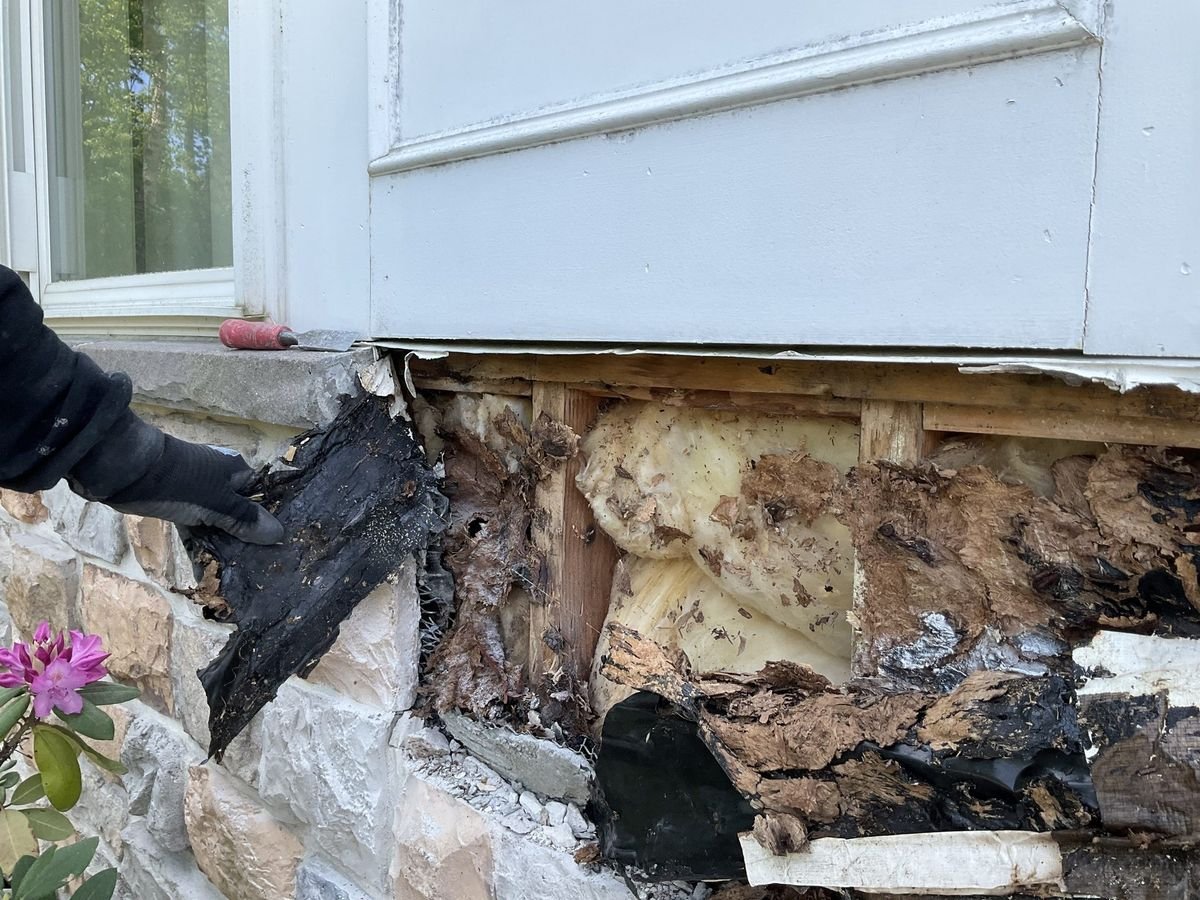
The visible damage is not always the point where water entered.
Interior staining, damaged finishes, deteriorated sheathing, wet insulation, mold-like growth or recurring sealant repairs may indicate a broader exterior condition.
Effective remediation depends on understanding the likely pathway, opening the assembly when authorized and necessary, correcting deficient transitions and reconstructing the affected area in the proper sequence.
Leaks often develop where systems, materials or construction phases meet.
Roof-to-Wall Conditions
Step flashing, counterflashing, kick-out flashing, WRB integration and siding clearance can affect how water exits the intersection.
Windows & Doors
Sill, jamb and head details must work with the surrounding drainage plane and exterior finishes.
Decks, Balconies & Attachments
Ledger, membrane, railing and wall connections can create concentrated exposure when not integrated correctly.
Penetrations & Terminations
Vents, utilities, fixtures, sealant joints, parapets and other terminations require durable, serviceable transitions.
Low-Slope Roofing & Drainage
Drains, scuppers, curbs, seams, edges and ponding-prone areas require coordinated water management. See our Roofing Systems services.
Cladding & Wall Assemblies
WRB laps, flashings, base conditions, openings and concealed damage may affect exterior wall performance.
A remediation project should correct the pathway—not only cover the damage.
Depending on the project, Stonebridge’s construction scope may include documentation of known concerns, selective removal, review of exposed conditions, replacement of deteriorated materials within the approved scope, flashing or membrane correction, reconstruction of roofing or wall components and organized closeout.
The specific work is developed around the property, available information, access and the conditions encountered during construction.
- Removal of affected finishes or exterior materials as authorized
- Protection and temporary weather measures during work
- Repair or replacement of damaged substrates within scope
- Correction of flashings, membranes and drainage-plane details
- Reinstallation of roofing, cladding, trim and interior finishes as applicable
- Documentation, punch-list completion and final cleanup
Stonebridge may evaluate roofing, siding, exterior-envelope assemblies, weather-resistive barriers, flashing conditions and water-intrusion concerns to help identify construction needs and develop appropriate repair, remediation or replacement scopes. When licensed engineering, architectural design, code inspection, laboratory analysis or other regulated professional services are required, those services are provided separately by the appropriate professional.
A clear process from condition review through remediation and closeout.
Water-intrusion remediation projects are planned around observed conditions, affected assemblies, access, sequencing, temporary protection and coordination with adjoining systems. See how Stonebridge moves projects from initial review through proposal, preconstruction, remediation and closeout.
A construction review may be appropriate when a leak is recurring, concealed or connected to an exterior transition.
Recurring Water Staining
The same area becomes wet again after sealant or surface repairs.
Deteriorated Exterior Materials
Siding, trim, sheathing, roofing or finishes show localized or widespread damage.
Multiple Systems Meet
The concern is located near a roof-wall, window, deck, parapet or penetration interface.
Share the leak history, property information and work already performed.
Photographs, reports, repair records and the locations where water becomes visible can help Stonebridge understand the requested construction scope.